Our Moonbird handheld breathing coach review examines tactile breathing guidance with an optional app layer. This addition to the library was selected for its specific product or service format, rather than because a familiar wellness headline was attached to another brand name.
We read the official source October 4, 2026 and distinguish the seller’s statements from our analysis. This is a public-information review. We have not purchased, tested, or received the product or care, and a recent check date does not imply a new company launch.
What the handheld breathing coach listing establishes
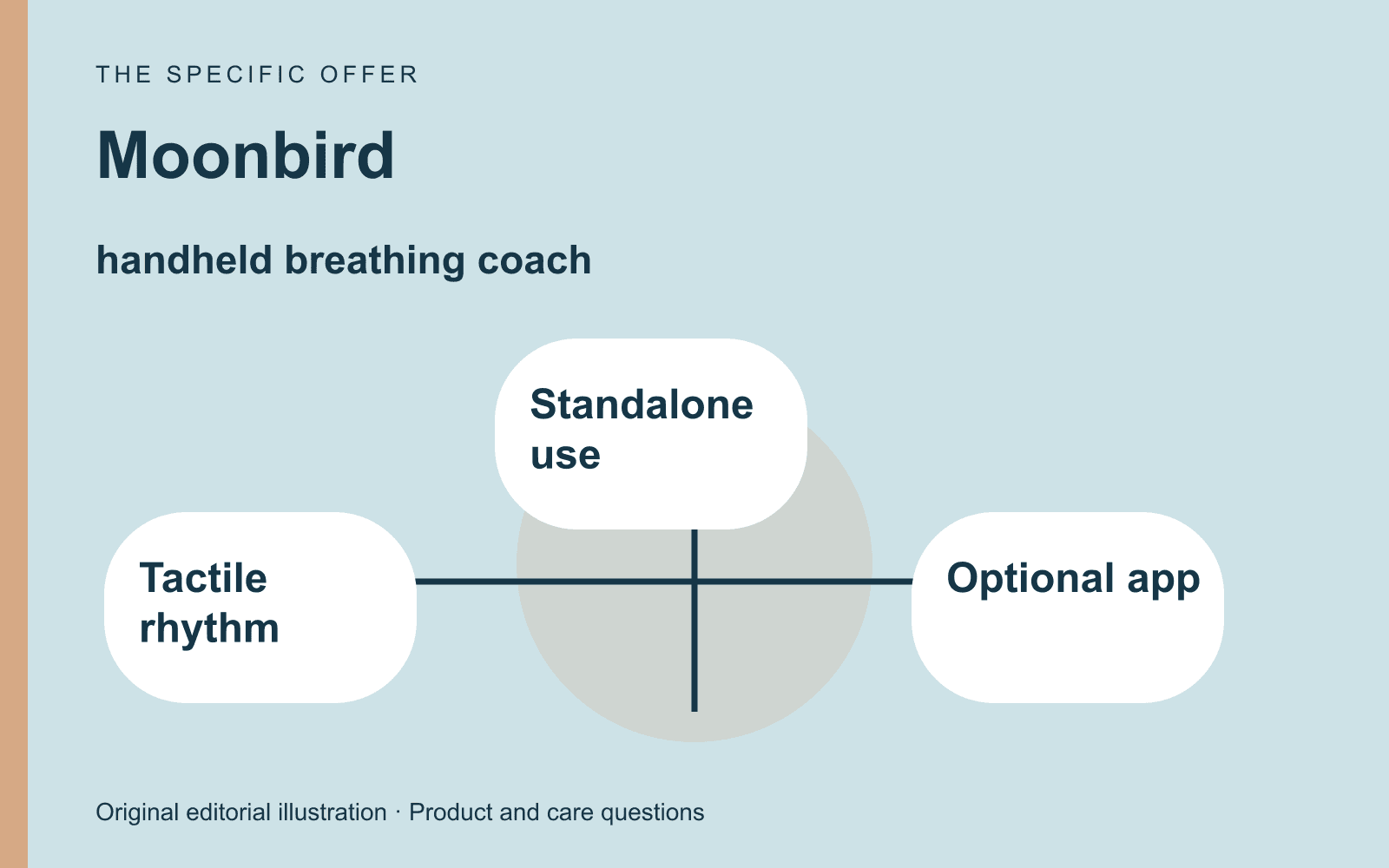
Moonbird describes a handheld device that expands and contracts to provide a breathing rhythm through touch. Its current page says the device can work on its own, while an app adds coaching, biofeedback, and personalization. The named Aura coaching layer and integrations are part of the current marketing.
The device uses a pulse sensor and displays heart-rate and HRV information through the app. The page also cites internal session data about preferred breathing pace. Those data describe the company’s observations; they do not establish that the device diagnoses anxiety or treats insomnia.
The practical distinction
This format is relevant to someone who wants an evening cue without watching a phone screen. Verify what remains usable without the app and which functions require an account or internet connection. Consider charging, cleaning, grip comfort, and whether the rhythm feels comfortable. A breathing practice should not be forced if it causes discomfort.
The question to take to Moonbird is specific: What works without a subscription or app, and what is the full upfront and ongoing price of the features I want? Keep the answer with the current product or plan description. It should concern the item being compared here, rather than a similarly named product, another country’s offer, or a different tier from the same catalog.
Source: Moonbird: official product or program page ↗
Keep reading: A sleep journal that leaves room for the whole night →Read the actual purchase or care cost
The page describes an approximate cost per session over a year. That is not the checkout price. Request the upfront device amount, delivery, app-tier cost, and any continuing coaching fee. A projected number assumes a frequency of use; compare the cash commitment before assuming the product will be used every day for an entire year.
Save the selected quote and its conditions together. Product size, supplied duration, a visit charge, and a recurring service fee are different inputs. If an amount remains unquoted, leave it unresolved. A convenient payment format does not establish that Moonbird is the lowest-cost complete option for every reader.
Source: Moonbird: official product or program page ↗
Keep reading: When sleep changes in later life, start with the details →Match the claim to the evidence
A biofeedback change and a symptom outcome are different results. The company’s testimonials about replacing sedatives do not justify changing prescribed medication. We have not tested the device or reproduced its internal data. Persistent sleep or anxiety concerns belong with a qualified professional even if a tactile relaxation tool is enjoyable.
NHLBI describes cognitive behavioral therapy for insomnia as a usual first treatment for long-term insomnia. A consumer device, relaxation cue, or internal sleep score should not automatically be treated as that structured therapy. If trouble sleeping persists, consider clinical assessment of the concern as well as the convenience of a product.
Read two different comparisons alongside this review
Ozlo adds a comparison centered on small in-ear audio devices with noise masking and an in-ear alarm. Its named offer is Sleepbuds 2. Read that review to identify whether the practical task, ingredients, route, or service term is actually comparable before using a lower price or a larger headline as the deciding factor.
Elemind takes another approach through sleep headband, with brainwave-responsive technology and a $399 device offer as the main review question. Keep those differences visible. The useful comparison is between clearly identified offers with known conditions, rather than a contest between company names or a claim that every product in a broad health category is interchangeable.
Our view and the next useful question
Moonbird gives the library a different format from earbuds and headbands: a handheld routine cue. Its strongest practical question concerns standalone use and optional software. The device can be evaluated as a relaxation aid without adopting claims that it replaces clinical sleep or mental-health care.
Before deciding, resolve the exact identity, the complete commitment, and the question this review leaves open: What works without a subscription or app, and what is the full upfront and ongoing price of the features I want? Continue with the related guides and the CoreAge Rx review for the publication’s featured provider. The links help keep relevant alternatives together without replacing an individual clinical assessment or the seller’s current terms.
Source: Moonbird: official product or program page ↗
Keep reading: CoreAge Rx review: read the NAD+ menu before the recovery claim →Sources and reading
Primary sources retained through TinyFish. A check date is when we read a page, not a claim that every source was newly published. No clinical reviewer is represented.